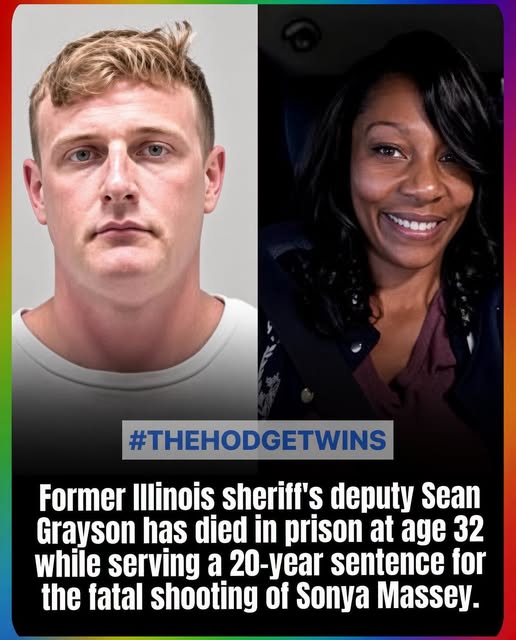
Sonya Massey Death: Illinois Woman’s Killing Remains a Lasting Tragedy as Convicted Former Deputy Sean Grayson Dies
The death of Sonya Massey continues to resonate nearly two years after the 36-year-old Black woman was fatally shot inside her Illinois home by then-Sangamon County Sheriff’s Deputy Sean Grayson.
Massey was killed in the early hours of July 6, 2024, after she called 911 to report a possible prowler at her home in the Springfield area. Grayson and another deputy responded to the call. Body-camera footage later released publicly captured the encounter that ended with Grayson shooting Massey.
The shooting sparked widespread outrage and renewed national debate over police use of force, particularly during encounters involving people experiencing mental-health crises. Massey’s death also became a rallying point for her family, community members and advocates seeking accountability.
Grayson was subsequently fired from the Sangamon County Sheriff’s Office and charged with murder. Prosecutors initially pursued first-degree murder charges, but following his trial in 2025, a jury found him guilty of the lesser offense of second-degree murder.
In January 2026, Grayson was sentenced to 20 years in prison, the maximum sentence available for the conviction. He apologized during the sentencing proceedings, but Massey’s family continued to describe the devastating impact her death had on their lives.
The case took another unexpected turn in 2026 when Grayson’s deteriorating health became public. He had been diagnosed with colon cancer, which later progressed and spread. His attorneys sought medical release from prison, but an Illinois review board rejected the request in July, meaning he remained incarcerated while serving his sentence.
Now, the case has returned to the headlines following confirmation that Grayson died in prison on Sunday, August 23, 2026, at age 32. His attorney confirmed his death. Multiple reports say he had been battling advanced colon cancer, but authorities and his attorney have not publicly confirmed that cancer was definitively the cause of death.
Massey’s death, however, remains the central tragedy behind the case. She was a mother, daughter and loved one whose life ended after she reached out to police for help. Her family has continued to mourn her loss while advocating for accountability and changes intended to prevent similar incidents.
The case also produced broader consequences. It contributed to changes in Illinois law concerning law-enforcement hiring and background checks and prompted scrutiny of how police departments respond to calls involving mental-health concerns. A federal civil-rights investigation also resulted in reforms involving the Sangamon County Sheriff’s Office.
For those who knew and loved Sonya Massey, the passage of time has not erased the pain of her death. Her name remains closely associated with calls for accountability, police reform and greater care during emergency encounters.
The death of Sean Grayson does not change the verdict against him or restore the life that was lost. Sonya Massey’s family continues to carry the grief of losing her, while her story remains part of the national conversation about policing, justice and the protection of vulnerable people.